Time to Rebrand the T-Shirts and Coffee Mugs….?

The Chronicle of Higher Education reports that Dixie State University (DSU), located in St. George, Utah, is considering changing its name to Utah Polytechnic State University in order to avoid being associated with the slaveholding South (June 25th issue).  

DSU is by no means the only school grappling with an unsavory moniker in these linguistically sensitive times.  Here are 10 more institutions that are currently being pressured by various constituencies to change their names:

Colby College (Waterville, Maine):  Colby was the preferred cheese of plantation owners in the antebellum South, and it’s featured in several major scenes in the film Gone with the Wind where appetizers are served to privileged white people.  Faculty will vote in the fall on a proposal to change the college’s name to Gouda. 

University of Tulsa (Tulsa, Oklahoma):  When read backwards, “Tulsa” becomes a vile sexist slur.  Enough said. 

Brown University (Providence, Rhode Island):  “Brown” appropriates the name of an entire BIPOC subgroup and uses it to characterize a school that is largely white.  No way this is acceptable in 2021.  

Dickinson College (Carlisle, Pennsylvania):  A slang term for male genitalia is egregiously embedded in the college’s name.  A faculty task force recently recommended that the school be rechristened “Kinson College.”

Rice University (Houston, Texas):  Highly offensive to China, the world’s largest producer of this vital grain.  Rice will rebrand itself as Chili University in 2023, in honor of the Lone Star State’s signature dish.  

Mount St. Mary College (Newburgh, New York):  A name change became imperative when school officials realized that “Mount” was being used as a sexually aggressive verb in hostile social-media depictions of the college.  The Vatican has demanded that the school adopt a new name that shows greater respect for the Blessed Virgin.  

Bates College (Lewiston, Maine):  The descendants of infamous motel manager Norman Bates, the protagonist in Psycho, has requested a name change.  As his great-niece put it, “Uncle Norman had absolutely no interest in liberal arts education.  His passions were shower curtains and cutlery, and Bates does not offer a major in either of those.”

University of Idaho (Moscow, Idaho):  Another example of a sexist slur, this time against women named “Ida.”

Ball State University (Muncie, Indiana):  See “Dickinson College.”

University of Mississippi (Oxford, Mississippi):  Lots of bad memories here, associated with plantations, slave owners, racist violence, and mullets.  A name change to “University of Canada” is being considered.  

Let’s be honest: the time has come for EVERY college and university to take a hard look at what it calls itself.  


Protecting the 21st-Century Student-Athlete…..

No Joke:  A proposal to expand the NCAA College Football Playoff from 4 teams to 12 teams will be presented on June 22nd to the university presidents and chancellors who oversee the playoff system. 

If approved, the new arrangement would undoubtedly lengthen an already long college football season.  How can this be accomplished without jeopardizing the precious study time that today’s high-profile student-athletes devote to their courses?

Eric Barron, President of Penn State University and a member of the College Football Playoff’s Board of Managers, believes he has the answer:

Shorten the academic semester for ALL students.

“Really, this is a no-brainer,” says Barron.  “A semester usually lasts from 13 to 15 weeks.  Trust me, a lot of that time is filled with total crap.  I should know.  In my days as a full-time faculty member I taught more than my share of crap. 

“And let’s be honest.  Five years from now, over two-thirds of all Penn State undergrads will probably be majoring in E-Sports.  Hell, the content of a typical 3-credit E-Sports course can barely fill two lectures, including the hour it takes to explain our school’s policy on ‘trigger words’.  

“Let’s say we cut the semester down to 8 weeks.  Everyone could be done with their coursework and exams by Thanksgiving at the latest.  That would leave plenty of time to do justice to an expanded football season, with no annoying term-paper assignments floating around to distract players OR non-players.  It’s a win-win for all concerned.”

A reporter asked Barron if his proposal constituted additional evidence that capitalism’s rapacious lust for profits continues to dredge every bit of dignity and self-respect from the soul of higher education. 

Barron’s brow furrowed: 

“So, what’s your point?” 


Hue-niversity Life, 2021

In a recent installment of its “Race on Campus” column, The Chronicle of Higher Education examined the pros and cons of using the terms “minority,” “people of color,” and “Bipoc” to refer to groups of non-white individuals (June 8th online).  

The analysis presented is a valuable one, but it fails to explicitly discuss the linguistic challenge posed by another group that has been traditionally marginalized on college campuses: red-haired students.  As a service to University Life readers, here is an overview of the top 10 terms that professors employ when interacting with this population. 

Crimson Tide:  A respectful and empowering label, but it’s been trademarked by the University of Alabama, and their lawyers will sue you for invoking it if they find out.  Consider yourself warned. 

Merlots:  Associated with a popular red wine, this term is classy and highbrow.  However, many object that the word implies that all red-haired students are alcoholics.  Although most redheads do have serious drinking problems, a few do not. 

Red Delicious:  Favored by male professors who teach at women’s colleges in apple-growing regions of the country; increasingly regarded as offensive.  

Frecklers:  Capitalizes on the fact that red hair and freckles go together.  But not always.  This means that students with red hair but no freckles feel even further marginalized.  

Cardinalians:  Honors a bird of distinction, but representatives of the cardinal community, including the Audubon Society, have complained that the term unjustly appropriates avian identity for human purposes. 

Sunburners:  It’s true that individuals with red hair are especially vulnerable to sunburns.  Unfortunately, this makes the label a “trigger word” for many, bringing to the surface excruciating memories of the “scarlet hell” experienced after visits to the beach.  

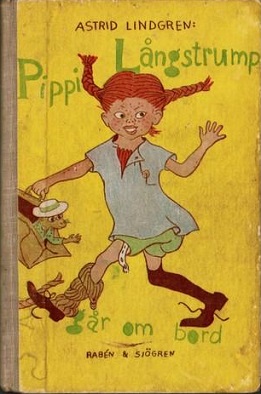
Pippies:  Pippi Longstocking, a fictional Swedish character with red hair, is a beloved figure both within and outside the red-haired community.  “Pippies” is the term officially recognized for addressing red-haired students at Augustana College in Rock Island, Illinois, a school with Swedish roots.  

Dye Jobs:  Considered a “red slur,” but still frequently employed by many faculty at colleges in the Deep South.  Do not use. 

Wildfires:  Another derogatory term, based in stereotypes about the quick tempers of people with red hair; used extensively in the Southwest and Far West. 

Hucknallers:  A tribute to Mick Hucknall, the red-headed lead singer of the British soul/pop group Simply Red.  Regrettably, virtually no one pays attention to this band in 2021, and use of the term has declined steadily since 1990.  Attempts to replace it with “Sheeranians,” in honor of another British singer (Ed Sheeran), have failed to gain traction.  

Best of luck in finding a word that works for you. 


CRT: What Do You See……?

The American Psychological Association announced yesterday that the Rorschach, the world-famous projective test using inkblots, will be replaced on August 1, 2021 by the Critical Race Theory Reaction Inventory (CRTRI).

Administration of the CRTRI is simple: subjects look at a piece of paper or computer screen displaying the phrase “Critical Race Theory” in a box.  They are then asked to immediately write down or say the first five things that come to mind in response to the stimulus.

Extensive pilot research demonstrates that political conservatives are likely to give the following answers:

“Instrument of Satan”

“Don’t understand it, don’t like it”

“Kill me now.  Please.”

“Worse than fluoride in our water supply”

“Left-wing poopy crap”

“Left-wing crappy poop”

“Whiny Whinerson” 

“But some of my best friends have acquaintances who know people who are Black….”

“Old-fashioned racism was good enough for my Confederate ancestors, and it’s good enough for me.  Micro-aggressions are for cowards.”

“Can I still hate Asians?”

In contrast, political liberals tend to offer responses such as:

“Explains everything….that has ever happened….anywhere”

“Precocious love child of Michel Foucault and Angela Davis”

“Totally woke”

“Totally dope”

“Totally dope-woke”

“Produces more guilt than Catholicism and Judaism combined”

“Proves that Ivory soap is the devil’s cleanser”

“Needs to be funnier”

“Don’t understand it, do love it”

“This applies to Asians too, right?”

A rubric for scoring the CRTRI is available from the American Psychological Association for $49.95.  According to APA President Jennifer F. Kelly, an individual’s score on the CRTRI is the single best predictor of whether that person has a poster of Ayn Rand, Che Guevara, or Mr. Rogers on their wall.